








Why Traditional Storage Systems Often Create Workflow Problems
In industrial workshops, maintenance departments, and manufacturing environments, storage systems are frequently selected based on available space or purchasing habits rather than actual operational requirements. As a result, many facilities eventually face the same issues:
- Low space utilization
- Disorganized tool storage
- Excessive operator movement
- Difficult inventory management
- Poor scalability as storage needs increase
When storage systems fail to align with workflow, even well-equipped facilities can experience reduced efficiency during daily operations.
This is one of the main reasons why modular drawer cabinets are increasingly being adopted in industrial environments.
Rather than functioning as simple storage furniture, modular drawer cabinets are designed to support organization, accessibility, and workflow integration under real operating conditions.

1. What Are Modular Drawer Cabinets?
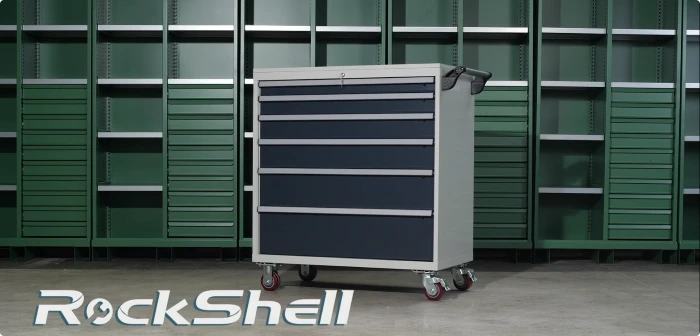
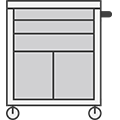
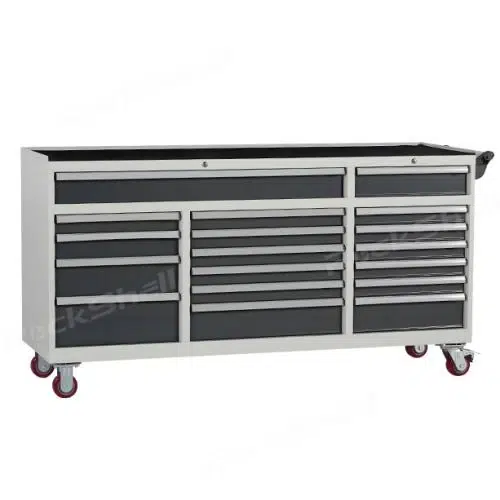
A modular drawer cabinet is a storage system built around enclosed drawers that can be configured, combined, and expanded according to operational needs.
Unlike open shelving or portable storage systems, modular drawer cabinets are engineered for:
- High-density storage
- Repetitive industrial use
- Controlled organization
- Long-term scalability
Their structure allows tools, components, and parts to remain organized within a compact footprint while maintaining fast and predictable access.
What “Modular” Means in Practice
In industrial drawer cabinet systems, modularity typically applies at two levels.
Drawer-Level Modularity
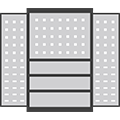
Different drawer heights can be arranged within the same cabinet to support different storage requirements.
This allows storage systems to accommodate:
- Small parts
- Precision tools
- Heavy equipment
- Large components
Storage space is therefore matched to actual item dimensions rather than forcing all items into identical compartments.
System-Level Modularity
The cabinet structure itself is also modular.
Multiple cabinets can be:
- Combined side by side
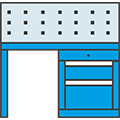
- Integrated with workbenches
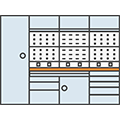
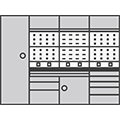
- Connected into storage walls
- Expanded over time
This allows storage layouts to evolve alongside workflow requirements rather than remaining fixed after installation.
Facility planning methodologies emphasize that storage systems should function as part of an integrated workflow layout rather than isolated units (Muther, 1973).
2. Why Modular Drawer Cabinets Improve Storage Efficiency
Higher Storage Density
Drawer-based storage systems typically achieve better space utilization than open shelving systems.
By organizing items horizontally within enclosed compartments:
- Vertical unused space is reduced
- Small items can be categorized more efficiently
- Dense inventories remain structured and accessible
Studies on storage system design indicate that compartmentalized storage solutions generally achieve higher efficiency than open shelving when handling dense inventories or small components (Rouwenhorst et al., 2000).
Controlled and Predictable Access
In industrial environments, accessibility is not simply about visibility. It is about retrieving items consistently, safely, and efficiently.
Drawer cabinet systems improve:
- Retrieval consistency
- Item organization
- Inventory visibility within categories
- Protection against dust and debris
The enclosed structure also reduces accidental displacement of stored items during daily operations.
Reduced Operator Movement
Storage systems directly influence how operators move within a workspace.
When tools and components are stored close to the point of use:
- Walking distance decreases
- Repetitive handling is reduced
- Workflow interruptions become less frequent
From an ergonomics perspective, unnecessary movement and awkward positioning are recognized factors that negatively affect productivity and increase fatigue (Niebel & Freivalds, 2009).
3. Where Modular Drawer Cabinets Work Best
Modular drawer cabinets are particularly effective in environments requiring:
- Frequent tool access
- High-density parts storage
- Controlled organization
- Long-term operational consistency
They are commonly integrated into:
- Industrial workshops
- Maintenance departments
- Manufacturing facilities
- Professional garages
- Assembly workstations
Their ability to support both storage efficiency and workflow integration makes them especially suitable for environments where operational continuity matters.

4. Common Misapplications in Industrial Storage
Storage inefficiencies are often caused not by insufficient space, but by selecting storage systems that do not match operational requirements.
Typical problems include:
Using Open Shelving for Dense Component Storage
While shelving provides visual access, it often becomes inefficient when handling:
- Small parts
- Mixed inventories
- High-density storage requirements
Bins and containers frequently create unused internal space while reducing retrieval consistency.
Using Portable Storage as Centralized Systems
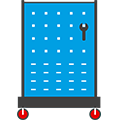
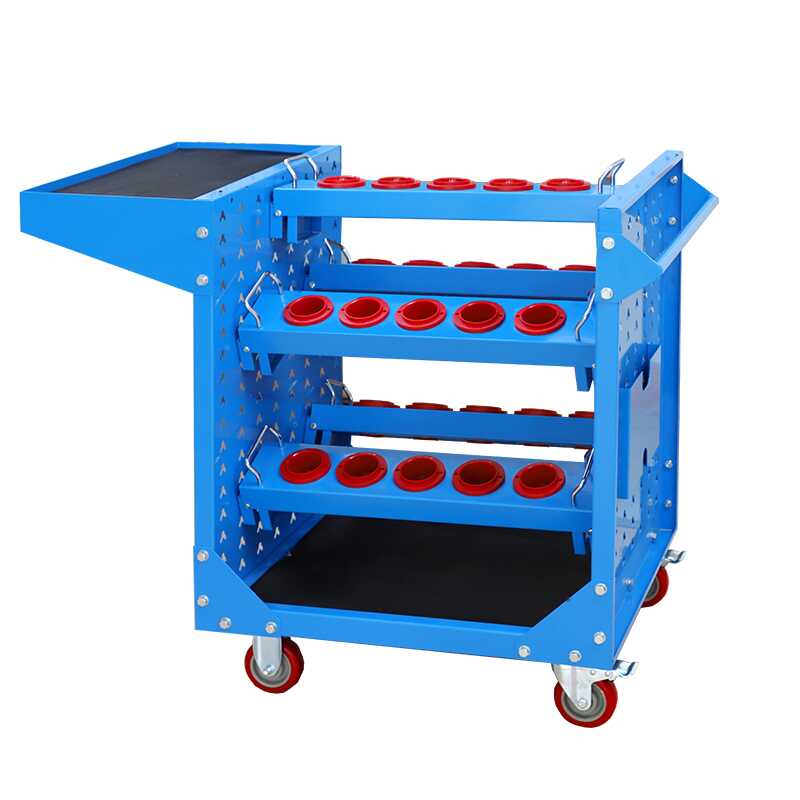
Portable tool storage systems are primarily designed for mobility and individual use.
When subjected to:
- Shared access
- Heavy concentrated loads
- Continuous industrial operation
their organization and durability often become difficult to maintain over time.
Treating Storage as Standalone Furniture
One of the most common planning mistakes is selecting storage units individually without considering workflow integration.
Storage systems should support:
- Task flow
- Operator movement
- Access frequency
- Future expansion
rather than functioning independently from the work environment.
5. A Practical Approach to Selecting Modular Drawer Cabinets
Step 1: Evaluate Storage Characteristics
Before selecting a system, it is important to understand:
- Item weight
- Storage density
- Access frequency
- Organizational requirements
Heavy and frequently accessed items place very different demands on storage systems than occasional-use materials.
Step 2: Analyze Workflow
Storage efficiency depends heavily on how work is actually performed.
Consider:
- Operator movement patterns
- Distance between storage and workstations
- Frequency of retrieval during tasks
- Accessibility requirements during operation
Even storage systems with sufficient capacity can reduce efficiency if they interrupt natural workflow.
Step 3: Plan for Scalability
Industrial storage requirements rarely remain static.
A scalable storage system should allow:
- Future expansion
- Layout reconfiguration
- Integration with new workstations
- Long-term operational flexibility
A well-planned layout minimizes future adjustments while supporting efficiency and safe daily use.
Final Takeaway: Storage Systems Should Support Workflow
Modular drawer cabinets are becoming increasingly common in industrial environments because they combine:
- High-density storage
- Controlled organization
- Workflow integration
- Long-term flexibility
Their value is not defined only by storage capacity, but by how effectively they support daily operations.
When storage systems align with workflow requirements, organization becomes part of operational efficiency rather than a separate task.
As a professional manufacturer, Rockshell specializes in industrial-grade modular drawer cabinet systems designed for real-world applications. We work with distributors worldwide and provide OEM/ODM customization solutions for different industries and markets.
For product inquiries or partnership opportunities, feel free to contact our team anytime.