












Why Traditional Garage Storage No Longer Meets Modern Needs
As garages continue evolving from simple parking spaces into multifunctional work areas, traditional storage methods are becoming increasingly inefficient. Fixed cabinets, scattered shelving, and standalone toolboxes often fail to support changing storage demands, workflow efficiency, and long-term organization.
Modern garages now serve multiple purposes:
- Tool storage
- Equipment maintenance
- DIY projects
- Automotive repair
- Workspace organization
This shift has increased demand for more flexible and scalable systems—leading to the rise of modular garage storage solutions.

What Are Modular Garage Storage Solutions?
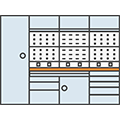
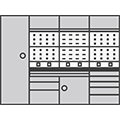
Modular garage storage solutions are storage systems built around interchangeable and expandable components rather than single standalone units.
These systems typically combine:
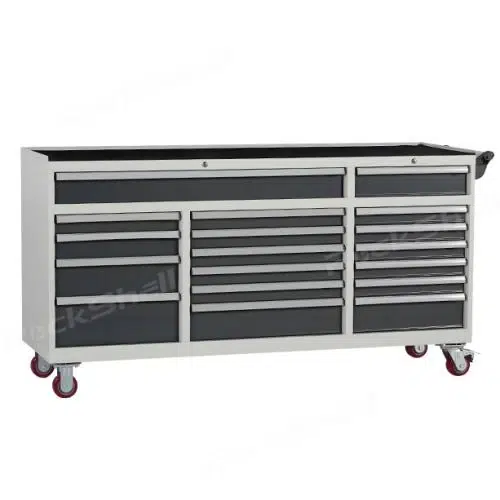
- Drawer cabinets
- Wall cabinets
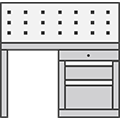
- Workbenches
- Pegboards
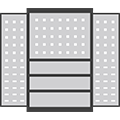
- Tall storage cabinets
- Open shelving
The modular structure allows users to configure layouts according to available space, workflow, and storage requirements.
Unlike fixed storage setups, modular systems can be expanded, rearranged, or upgraded without replacing the entire workspace.
Why Modular Systems Improve Garage Efficiency
1. Flexible Space Utilization
One of the biggest advantages of modular storage is adaptability.
Different garage layouts require different storage strategies. Modular systems allow users to:
- Optimize wall space
- Reduce floor clutter
- Build storage vertically and horizontally
- Adjust configurations as needs change
This flexibility improves both organization and movement efficiency.
2. Better Workflow Organization
Storage systems directly affect how efficiently work is performed.
A modular garage setup allows tools and equipment to be positioned according to frequency of use and workflow sequence. Frequently used items remain accessible, while less frequently used equipment can be stored in overhead or enclosed cabinets.
“Efficient storage reduces unnecessary movement and improves task continuity.”
From an ergonomics perspective, reducing repeated reaching, bending, and walking contributes to improved productivity and reduced fatigue (Niebel & Freivalds, 2009).
3. High-Density and Structured Storage
Compared with basic shelving or standalone cabinets, modular systems support more organized storage.
Drawer-based modules improve:
- Space utilization
- Item categorization
- Access consistency
- Protection from dust and debris

4. Scalability for Long-Term Use
Garage storage needs rarely remain static.
As tool collections expand or workflows evolve, modular systems can scale without requiring a complete redesign.
Users can:
- Add new cabinets
- Extend work surfaces
- Integrate additional wall storage
- Reconfigure layouts over time
This long-term flexibility reduces replacement costs and improves investment value.
Key Components of a Modular Garage Storage System
Drawer Cabinets
Designed for organized storage of tools, parts, and equipment with controlled access and high load capacity.
Wall Cabinets
Help maximize vertical space while keeping the workspace visually clean.
Pegboards and Back Panels
Provide quick-access storage for frequently used tools.
Workbenches
Create integrated work zones while combining storage and operational space.
Tall Cabinets
Suitable for storing large equipment, supplies, or infrequently used items.
Common Mistakes in Garage Storage Planning
Many inefficient garage setups result from focusing only on storage quantity rather than workflow integration.
Common issues include:
- Using unrelated standalone cabinets
- Overreliance on open shelving
- Poor accessibility for frequently used tools
- Lack of expansion capability
A Practical Approach to Choosing Modular Garage Storage Solutions
Step 1: Evaluate Storage Types
Consider:
- Tool sizes
- Weight requirements
- Frequency of access
Step 2: Analyze Workspace Flow
Determine:
- Where work is performed
- Which tools are used together
- How movement occurs within the garage
Step 3: Plan for Future Expansion
Choose systems that allow:
- Additional modules
- Reconfiguration
- Long-term compatibility
Final Takeaway: Modular Storage Supports Smarter Workspaces
Modular garage storage solutions are not simply about appearance or storage volume. Their real value lies in flexibility, workflow efficiency, and long-term adaptability.
By combining structured organization with scalable design, modular systems create garages that are:
- More efficient
- Easier to maintain
- Better suited for evolving needs
As a professional manufacturer, Rockshell specializes in modular garage storage systems designed for professional and industrial environments. We work with distributors worldwide and provide OEM/ODM customization solutions to support different market requirements.
For product inquiries or partnership opportunities, feel free to contact our team anytime.


