















In electronics manufacturing, semiconductor production, precision assembly, and laboratory environments, an ESD Workbench (Anti-Static Workbench) is a fundamental piece of equipment for protecting product quality and ensuring operator safety.
Electrostatic discharge (ESD) can damage sensitive electronic components in an instant. Therefore, a compliant and reliable ESD workbench must be systematically designed, structurally stable, and customizable to meet real production needs.
This article provides a comprehensive overview of the core specifications of an ESD workbench, covering design philosophy, structural standards, and material configurations.
1. Human-Centered Ergonomic Design
A high-quality anti-static workbench is not only about ESD protection but also about comfort and productivity:
Ergonomic height design reduces fatigue during long working hours
Well-proportioned tabletop space supports assembly, inspection, and repair tasks
Balanced structural design combines industrial aesthetics with practicality
Improves overall work efficiency and enhances the professional image of the workspace
2. Modular Structure for Flexible Configuration
The ESD workbench adopts a modular design concept, allowing flexible combinations based on workstation requirements:
Multiple optional accessories: hanging panels, shelves, lighting systems, tool rails
Functional modules can be installed independently or combined freely
Easy to upgrade or expand in the future
Adapts to different production processes and workflow changes
With modularity, an anti-static workbench becomes a scalable work system rather than a fixed piece of equipment.

3. Standardized Design with Customization Capability
While meeting industry standards, ESD workbenches also support customization:
Standardized structures ensure stability and consistency for mass deployment
Size, load capacity, and configurations can be customized based on user needs
Suitable for different industries and workshop environments
Achieves a balance between standardized manufacturing and personalized application
4. Core Anti-Static and Material Specifications
4.1 Anti-Static Countertop
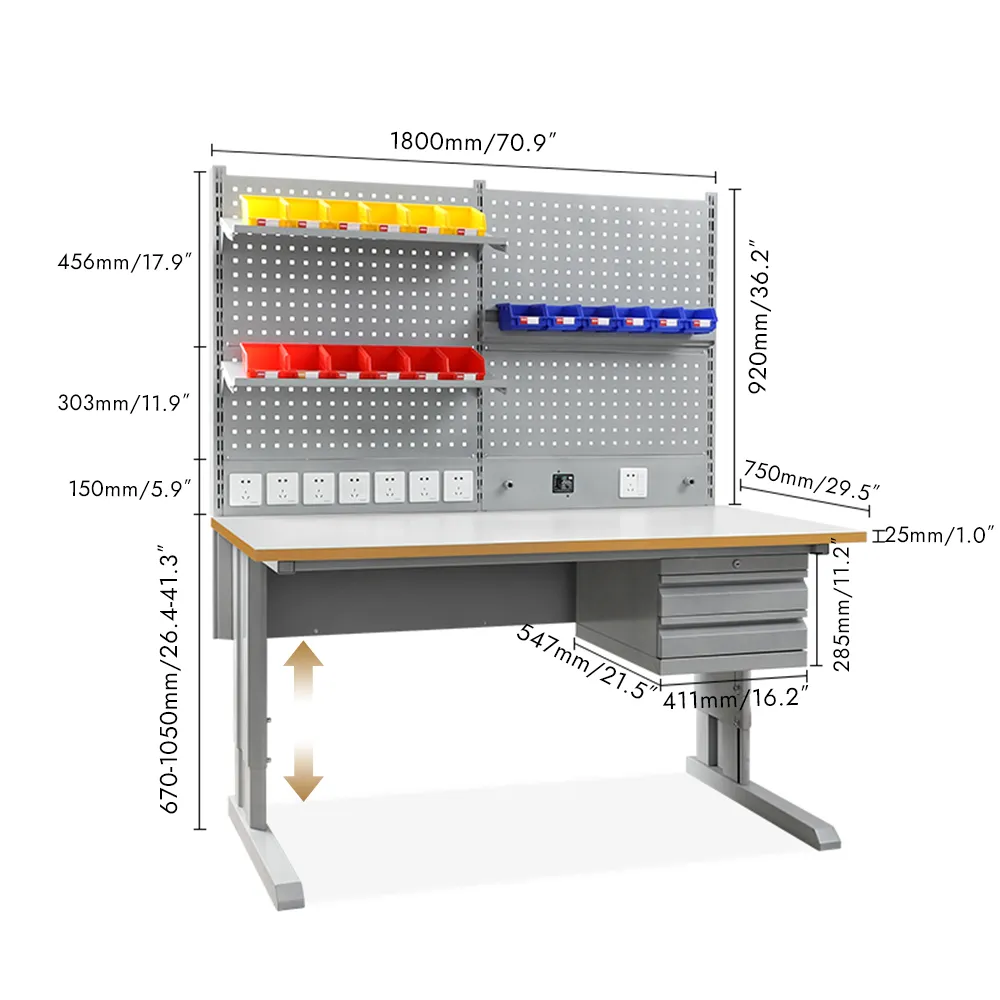
25mm German-imported anti-static tabletop
Overall ESD protection across the entire surface
Resistant to acids, alkalis, wear, oil, and impact
Effectively dissipates and directs static electricity to protect sensitive components
4.2 Metal Surface Treatment
All metal components undergo multiple industrial-grade surface treatments:
Pickling
Phosphating
High-voltage electrostatic powder coating
These processes ensure a smooth, durable, corrosion-resistant surface while extending service life.
4.3 Integrated Anti-Static System Design
An anti-static workbench is not just an ESD tabletop—it is a complete system:
Anti-static countertop
Grounded metal structure
Clearly defined static discharge paths
Eliminates static electricity risks at the source
This integrated design is ideal for environments with strict ESD control requirements
5. Functional Configuration Overview
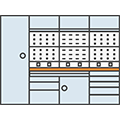
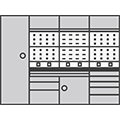
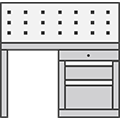
Hanging Panel System (Optional)
Pegboard / Louvered panel / Document hanging panel
Two standard sizes available, customization supported
Adjustable Tilted Shelf (Optional)
Height adjustable
15° tilt angle
20mm folded edge to prevent items from sliding
Lighting Panel and Rail System (Optional)
Adjustable height and front-back positioning
Optional light panel or tri-proof lamp (dustproof, waterproof, corrosion-resistant)
Compatible rail system
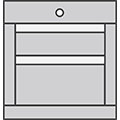
Two-Drawer Hanging Cabinet
Three-stage ball-bearing slides
45kg load capacity per drawer
100% full extension
50,000 open/close cycles
One-piece integrated handle panel
I-Beam Table Legs
Height adjustable by up to 350mm
Total load capacity up to 500kg
Exceptional stability for heavy-duty operations
Conclusion
What are the specifications for an ESD workbench?
The answer lies not only in numerical parameters, but in system-level design capability.
A professional anti-static workbench / ESD workbench should provide:
Stable and reliable ESD protection
Ergonomic and modular design
Industrial-grade materials and structural strength
Compatibility between standardized production and customization
In high-demand electronic and industrial environments, choosing the right ESD workbench is a critical step toward ensuring product quality, safety, and production efficiency.


