
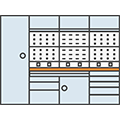
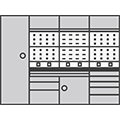

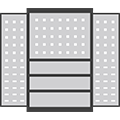

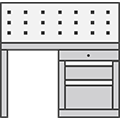






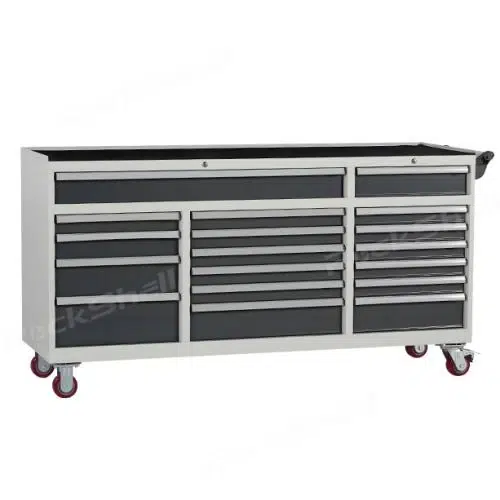


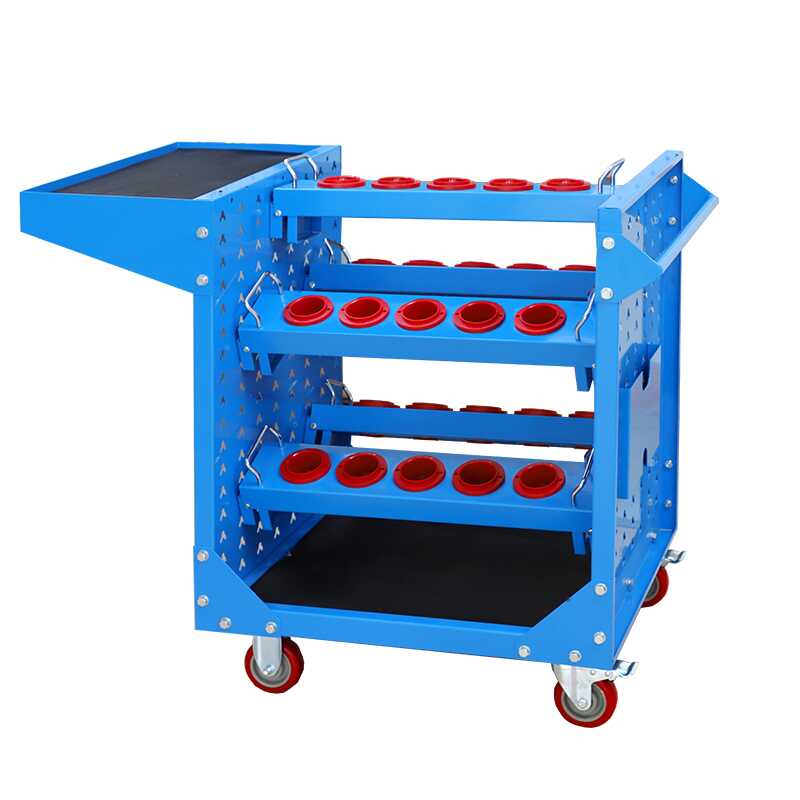


Heavy-duty industrial cabinets are engineered to perform in demanding work environments where durability, load capacity, and long-term reliability are critical.
Unlike light-duty storage units, heavy-duty industrial cabinets are designed for factories, maintenance facilities, warehouses, automotive workshops, and industrial production lines where tools and components are used daily under high load conditions.
Understanding the core features of heavy-duty industrial cabinets helps procurement teams, distributors, and facility managers make informed purchasing decisions.
1. Reinforced Structural Construction
The foundation of any heavy-duty industrial cabinet is its structural integrity.
High-quality industrial cabinets are manufactured using thick-gauge steel frames with reinforced corners and welded joints. This ensures:
- Superior resistance to deformation
- Stability under continuous heavy loads
- Long service life in high-frequency environments
Structural reinforcement prevents cabinet distortion even when drawers are fully loaded.

2. High Load-Bearing Drawer Systems
One of the defining features of heavy-duty industrial cabinets is drawer performance.
Industrial-grade drawer systems typically include:
- Heavy-duty ball-bearing slides
- Single or dual rail systems
- Full-extension drawer capability
- Clearly specified per-drawer load ratings
Depending on the application, drawer capacities may range from medium-duty loads to high-capacity industrial ratings suitable for tools, machine parts, and hardware components.
Reliable drawer systems ensure smooth operation even after years of continuous use.
3. Large Overall Load Capacity
In addition to drawer strength, heavy-duty cabinets are engineered to support high total cabinet load ratings.
This includes:
- Reinforced base frames
- Strengthened internal supports
- Stable leveling feet or industrial casters
Large overall capacity makes these cabinets suitable for manufacturing plants and automotive workshops where weight distribution is significant.
4. Modular and Expandable Design
Modern industrial environments require flexibility.
Many heavy-duty industrial cabinets are designed with modular platforms that allow:
- Vertical stacking
- Side-by-side integration
- Combination with workbenches
- Addition of upper cabinets or pegboard systems
Modular design reduces long-term costs by allowing facilities to expand storage systems instead of replacing them entirely.
5. Industrial-Grade Surface Treatment
Surface finishing is essential in harsh environments.
Heavy-duty industrial cabinets typically feature:
- Electrostatic powder coating
- Corrosion-resistant finishes
- Scratch-resistant surfaces
- Oil and chemical resistance options
These finishes extend product lifespan and maintain professional appearance in demanding workplaces.
6. Advanced Locking and Security Systems
Security is a critical factor in industrial storage.
Heavy-duty cabinets may include:
- Central locking systems
- Individual drawer locks
- Anti-tilt safety mechanisms
- Secure key or digital locking options
These features protect valuable tools and equipment while ensuring safe operation.

7. Mobility and Stability Options
Depending on application requirements, heavy-duty industrial cabinets can be configured with:
- Industrial-grade casters with brakes
- Reinforced wheel assemblies
- Fixed base options with leveling feet
Mobile configurations are ideal for maintenance teams and flexible production layouts, while fixed installations offer maximum stability.
8. Ergonomic and Operational Enhancements
To support daily industrial use, many heavy-duty cabinets offer:
- Adjustable drawer dividers
- Labeling systems
- Integrated power outlets
- LED task lighting (optional)
- Compatible hanging panels or tool boards
These features enhance productivity by improving tool organization and accessibility.
Conclusion
Heavy-duty industrial cabinets are not simple storage units. They are engineered systems designed to support demanding industrial workflows.
Key features such as reinforced construction, high load-bearing drawers, modular expandability, advanced surface treatment, and secure locking systems ensure long-term reliability and operational efficiency.
For factories, distributors, and industrial facilities, selecting cabinets built to true heavy-duty standards is an investment in durability, safety, and productivity.


