








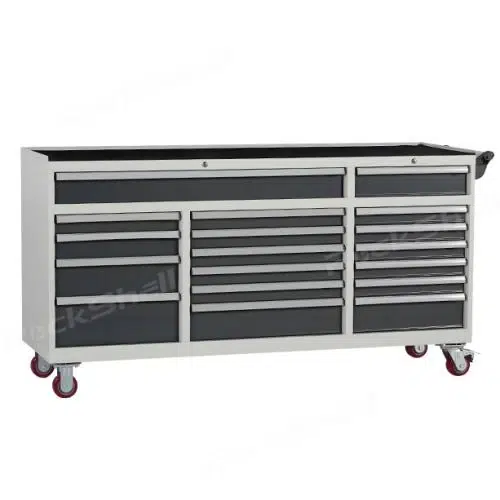


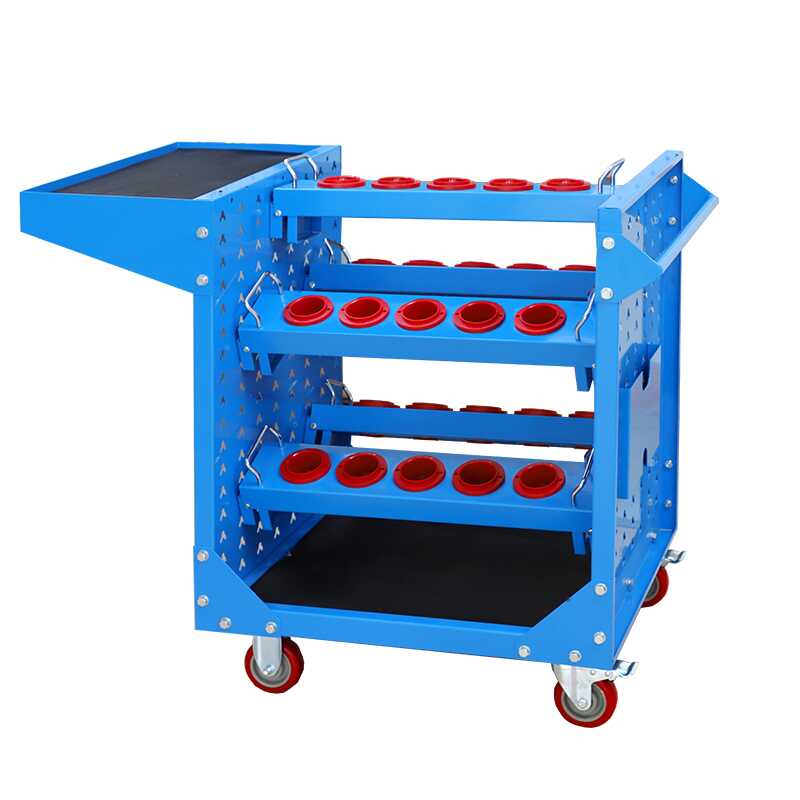


When purchasing a metal tool cabinet, many buyers focus on appearance and drawer count, but overlook one of the most critical factors—steel thickness.
The thickness of the steel directly impacts the cabinet’s lifespan, structural stability, and resistance to deformation under heavy loads. In this guide, we break down common thickness standards and their corresponding applications to help you make the right choice.
1. Why Steel Thickness Matters
Steel thickness (typically cold-rolled steel, SPCC) forms the “backbone” of a metal tool cabinet.
- Impact Resistance: Thicker steel resists dents from tools and daily use
- Load Capacity: Stronger frames and drawers can support heavier tools, parts, and equipment
- Durability: Thinner steel is more prone to weld failure or slide deformation after repeated use and movement
2. Thickness Levels & Applications
In the market, steel thickness for metal tool cabinets typically ranges from 0.6 mm to 1.2 mm. Below are the three main categories:
2.1 Entry-Level / Light-Duty (0.6 mm – 0.8 mm)
This is the most common and affordable option, often found in retail stores and DIY product lines.
Applications:
Home garages, hobby rooms, light-duty storage (screwdrivers, small wrenches, cleaning supplies)
Advantages:
- Budget-friendly
- Lightweight and easy to move
Case Study 1: Home Garage Setup
Description: A customer in Germany customized a desert yellow tool cart for a private garage.

2.2 Professional / Standard (0.8 mm – 1.0 mm)
This is the industry standard for professional mechanics and advanced users.
Applications:
Auto repair shops, small workshops, mobile workstations
Advantages:
- Best balance between cost and performance
- Sufficient rigidity to prevent cabinet distortion under heavy loads (socket sets, pneumatic tools)
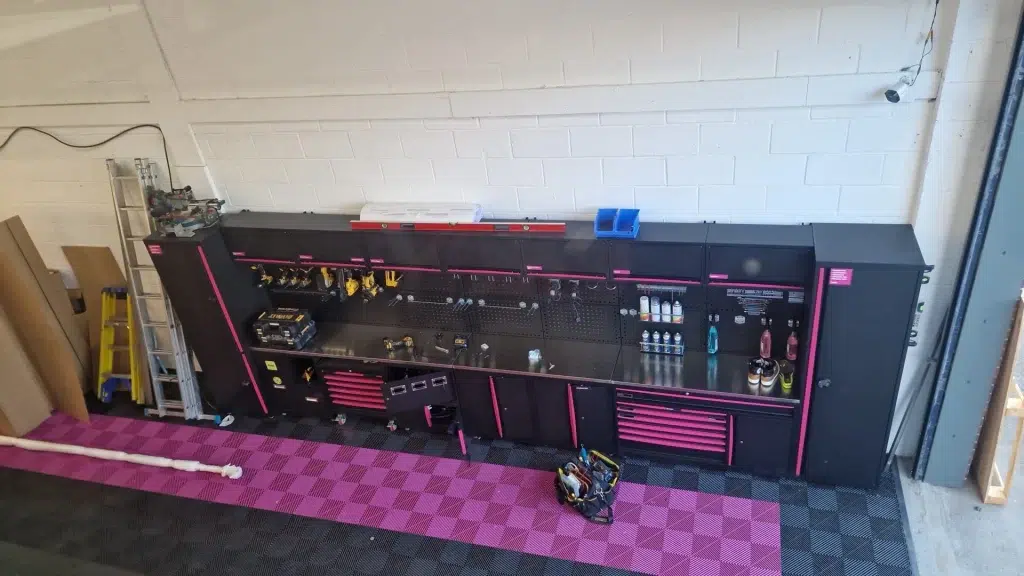
Case Study 2: Automotive Service Center
Description: A automotive brand equipped its workshop with 0.8 mm reinforced steel cabinets. Even under heavy daily use, the drawers remained smooth and stable.
2.3 Industrial / Heavy-Duty (1.0 mm – 1.5 mm and above)
For extreme environments or when individual drawers need to support 100–150 kg or more, heavy-duty steel is essential.
Applications:
Aerospace maintenance, heavy machinery factories, mining operations, or cabinets used as workbenches
Advantages:
- Extremely high load capacity (often 100 kg+ per drawer)
- Superior structural stability even under impact
Considerations:
- Higher cost
- Significant weight (a 7-drawer empty cabinet can exceed 150 kg)
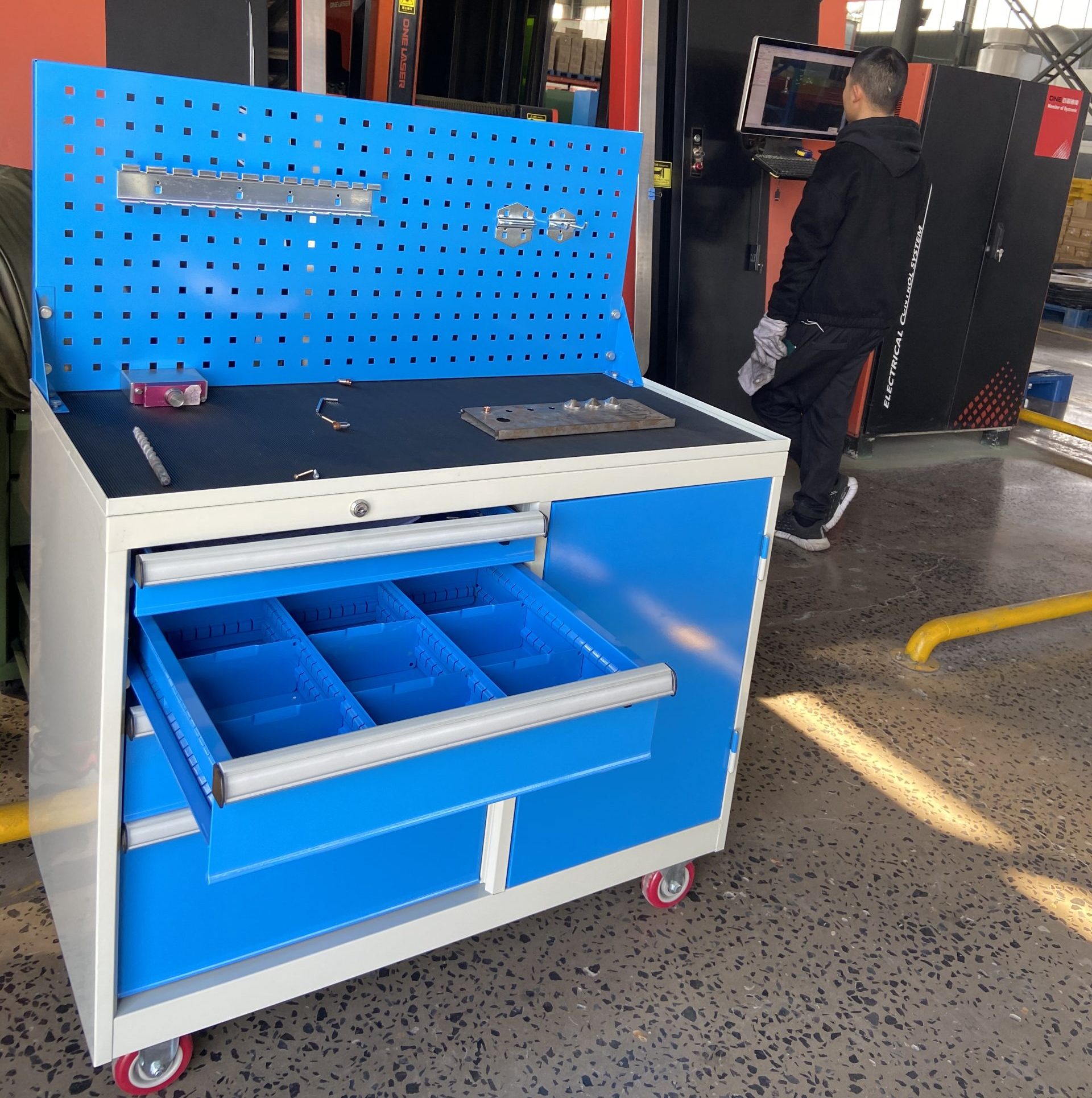
Case Study 3: Heavy Equipment Assembly Site
Description: A heavy-duty tool cabinet customized for a machinery manufacturer.
3. Buyer’s Guide: How to Identify True Steel Thickness
When purchasing a metal tool cabinet online, sellers may list thickness specifications—but buyers should watch for these common pitfalls:
- Slide Rail Matching:
Cabinets with 1.2 mm+ steel typically use high-quality ball-bearing slides or reinforced rail systems. If the steel is thick but the slides look weak, the design may be unreliable. - Weight Comparison:
Cabinets of the same size will vary significantly in weight. A 1.2 mm cabinet is noticeably heavier than a 0.8 mm version—weight can help verify actual thickness. - Load Capacity:
Heavy-duty cabinets (1.2 mm+) usually support 100–200 kg per drawer. If the rated load is low, the claimed thickness may not be accurate.
Conclusion
- For occasional home repairs: 0.7–0.8 mm is sufficient
- For professional mechanics: choose 0.8–1.0 mm
- For heavy industrial use (engine parts, molds): select 1.2 mm or above
Choosing the right steel thickness means more than selecting a metal tool cabinet—it’s an investment in safety, durability, and long-term performance.
If you’re unsure which specification fits your needs, feel free to contact the Rockshell Cabinets technical team. We can recommend a customized storage solution based on your tool list:
📩 [email protected]


