









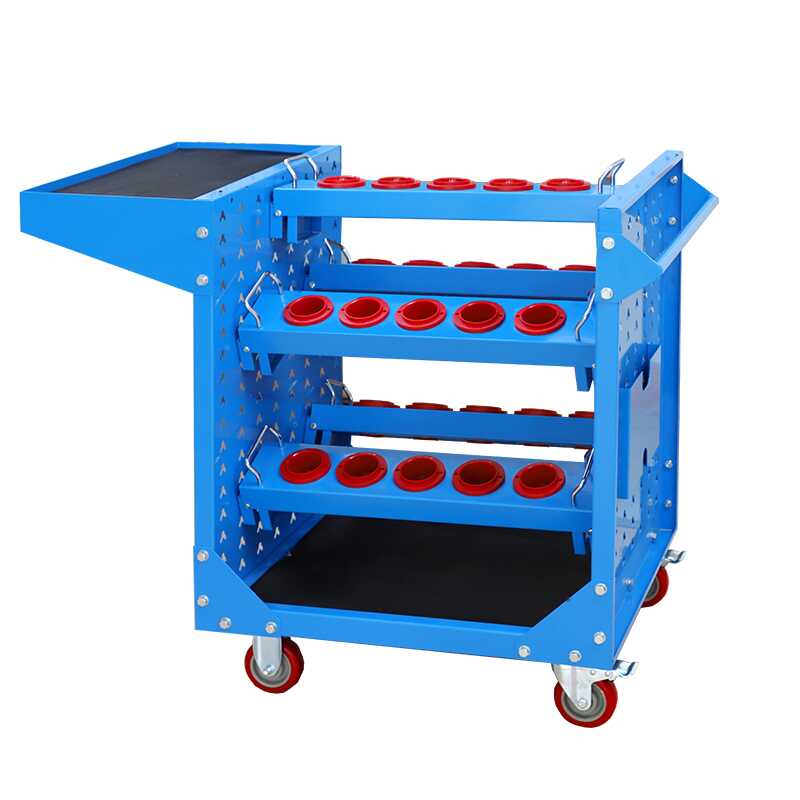


Tool carts play a critical role in garages, maintenance workshops, and industrial environments. However, when choosing the right solution, many buyers face the same question:
What is the difference between a heavy duty tool cart and a standard tool cart—and which one should I choose?
This guide compares heavy duty and standard tool carts from the perspectives of load capacity, construction, storage efficiency, and long-term value, helping you select the best option for your application.
1. What Is a Heavy Duty Tool Cart?
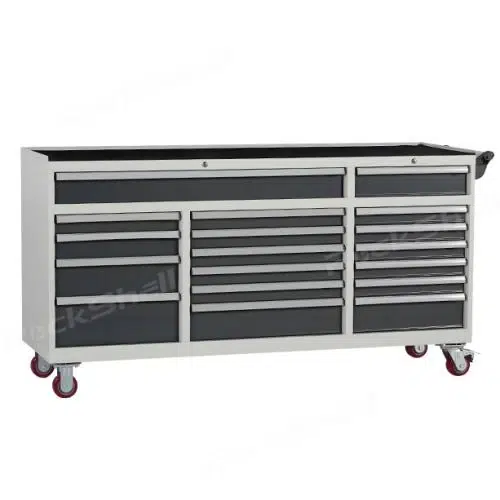
A heavy duty tool cart is designed for professional and industrial use where tools are heavy, usage is frequent, and durability is essential.
Key characteristics include:
Thicker steel cabinet construction
High drawer load capacity
Reinforced ball bearing slides
Industrial-grade casters
Designed for long-term, full-load operation
Heavy duty tool carts are commonly used in industrial workshops, service bays, production facilities, and professional garages.
2. What Is a Standard Tool Cart?
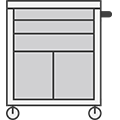
A standard tool cart focuses on practicality and cost-efficiency, making it ideal for:
Home garages
Light-to-medium maintenance work
Automotive repair shops with moderate tool weight
Standard models still offer reliable performance but are optimized for general tool storage rather than extreme loads.

3. Drawer Load Capacity: The Key Difference
Drawer Load Comparison
| Tool Cart Type | Single Drawer Load Capacity |
| Heavy Duty Tool Cart | 100–150 kg per drawer |
| Standard Tool Cart | 30–45 kg per drawer |
A typical standard tool cart uses three-section ball bearing slides with:
45 kg drawer load capacity
100% full-extension design
Heavy duty tool carts use reinforced or dual-slide systems, allowing safe storage of power tools, impact wrenches, and heavy components without drawer deformation.
4. Cabinet Structure and Material Thickness
Steel thickness directly affects stability and durability.
Heavy duty tool carts: thicker steel (typically ≥1.0 mm)
Standard tool carts: approx. 0.8 mm thick steel
Thicker steel improves:
Resistance to bending under load
Cabinet rigidity when fully loaded
Long-term durability in industrial environments
5. Slide System and Service Life
Standard Tool Cart Slides
Three-section ball bearing slides
100% drawer extension
Tested for 50,000 open-close cycles
Smooth operation for daily use
Heavy Duty Tool Cart Slides
Reinforced or double-slide systems
Stable performance under heavy loads
Lower failure rate over long-term use
For high-frequency, high-load operations, heavy duty slides provide better long-term reliability.
6. Internal Storage Efficiency
Both heavy duty and standard tool carts benefit from well-designed drawer organization systems.
Standard Tool Cart Storage
Pre-formed divider slots
Optional front-to-back adjustable dividers
Ideal for hand tools such as wrenches and screwdrivers
Heavy Duty Tool Cart Storage
Deeper drawers
Higher density storage for heavy tools
Designed for centralized management of industrial equipment
Proper drawer organization significantly improves space utilization and workflow efficiency.

7. Casters and Overall Load Capacity
Standard Tool Cart
Ø125 mm silent casters
2 swivel casters with brakes + 2 fixed casters
Single caster load capacity: approx. 160 kg
Total cart load capacity: up to 500 kg
Heavy Duty Tool Cart
Industrial-grade heavy-load casters
Better impact resistance
Suitable for uneven floors and frequent movement
8. Application Scenarios
Choose a Heavy Duty Tool Cart If You:
Store heavy or power tools
Operate in industrial or production environments
Require high load capacity and long service life
Prioritize safety and structural stability
Choose a Standard Tool Cart If You:
Use light to medium-weight tools
Work in a garage or general repair shop
Need cost-effective and flexible storage
Focus on daily maintenance tasks
Conclusion: The Right Tool Cart Is the One That Fits Your Workload
The main difference between a heavy duty tool cart and a standard tool cart lies in load capacity, structural strength, and long-term durability.
Heavy duty tool carts are a smart investment for demanding environments with heavy tools and frequent use.
Standard tool carts, when well-designed, offer excellent efficiency and value for everyday workshop needs.
Choosing the right tool cart means investing in productivity, safety, and long-term performance.