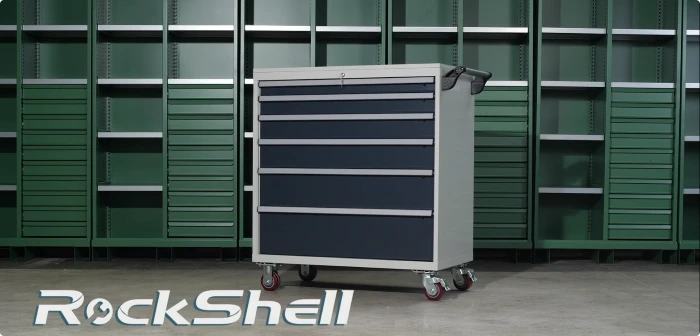











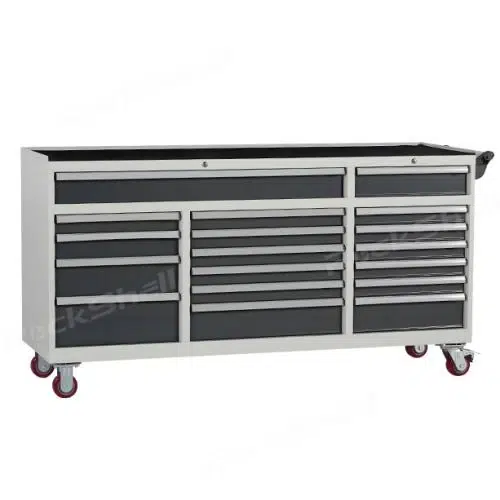




When planning an efficient garage storage system, one of the most important decisions is choosing between a standard workbench system and an industrial workbench system.
Both systems are designed to organize tools, improve workspace efficiency, and create a professional garage environment. However, they differ significantly in load capacity, module configuration, and countertop materials.
Understanding these differences will help you select the right garage storage solution for your needs.
Key Differences Between Standard and Industrial Workbench Systems
1. Drawer Load Capacity
Drawer strength is one of the most critical factors when choosing a garage storage system.
- Standard workbench system: Drawer load capacity 45 kg per drawer
- Industrial workbench system: Drawer load capacity 150 kg per drawer
Industrial workbench drawers are designed with reinforced slides and stronger steel structures, allowing them to store heavier tools, machinery parts, and industrial equipment.
Standard systems are more suitable for everyday hand tools such as wrenches, screwdrivers, and power tool accessories.

2. Overall Load Capacity
Another major difference is the total weight capacity of the system.
- Standard workbench system: Total Table Load 500 kg
- Industrial workbench system: Total Table Load 1000 kg
Industrial systems are built with thicker steel frames and reinforced structures, making them suitable for heavy-duty professional use.
3. Module Configuration
Garage storage systems are usually modular, allowing flexible layout arrangements.
- Standard workbench system: 10 modules
- Industrial workbench system: 11 modules
Industrial systems often include an additional storage or functional module, offering more flexibility and expanded storage capacity.
4. Worktop Materials
The choice of worktop material affects durability, work performance, and appearance.
Standard Workbench System (Default Worktop):
- Stainless steel countertop
- Corrosion-resistant and easy to clean
- Ideal for general garage use and light maintenance work
Industrial Workbench System (Default Worktop):
- Rubberwood solid wood countertop
- Excellent impact resistance
- Suitable for heavy-duty mechanical work
Both systems also support optional worktop materials,
These options allow users to customize the workbench according to specific work environments.

Shared Features of Both Garage Storage Systems
Despite their structural differences, both systems share several practical features.
Adjustable Feet
Both workbench systems are equipped with adjustable feet, allowing the workstation height to be adjusted to accommodate uneven floors and ensure stability.
This feature is especially useful in garages, workshops, and industrial environments.
LED Lighting
Both systems can be equipped with LED lighting, which improves visibility and enhances working efficiency.
LED lights can be installed above the workbench or under cabinets to provide clear illumination for detailed tasks.
Custom Color Options
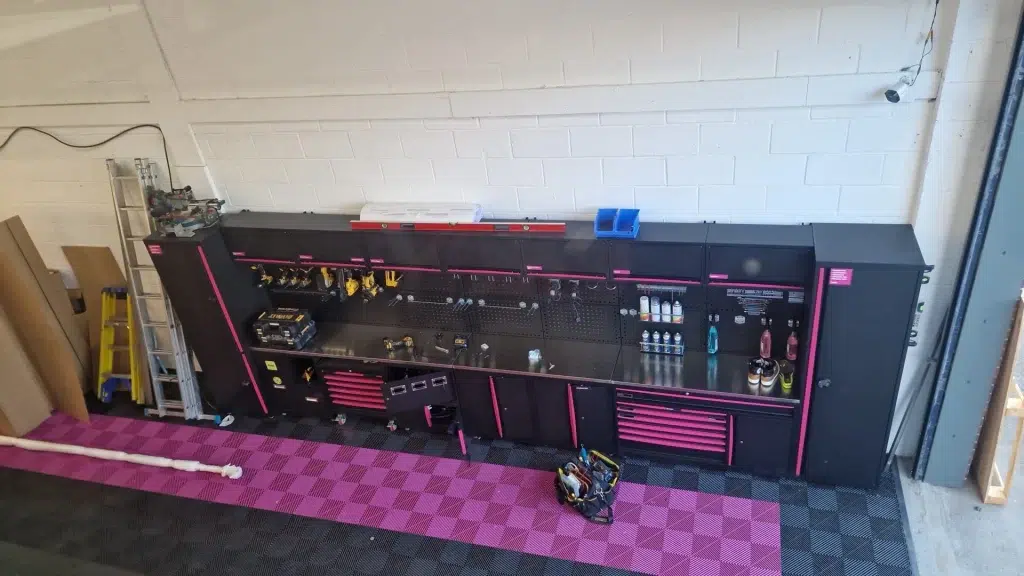
To match different workspace styles or brand identities, both systems support custom color options.
Common colors include:
- Black
- Red
- Blue
- Grey
- Yellow
- White
For commercial users or distributors, custom colors can also help strengthen brand identity and create a more professional workspace.
How to Choose the Right Garage Storage System
When deciding between a standard and industrial system, consider your workspace needs.
Choose a Standard Workbench System if you:
- Use a home garage or DIY workspace
- Store mostly hand tools
- Need a practical and cost-effective solution
- Do not require heavy-duty load capacity
Choose an Industrial Workbench System if you:
- Run a professional repair workshop
- Store heavy tools or machine components
- Need higher durability and load capacity
- Expect long-term intensive use
Conclusion
A well-designed garage storage system not only improves organization but also increases productivity and workspace efficiency.
The standard workbench system is ideal for home garages and light-duty work, while the industrial workbench system is designed for professional environments requiring greater strength and durability.
By choosing the right configuration, worktop material, and modular layout, you can create a highly efficient and customized garage workspace that meets both functional and professional needs.
.jpg.webp)