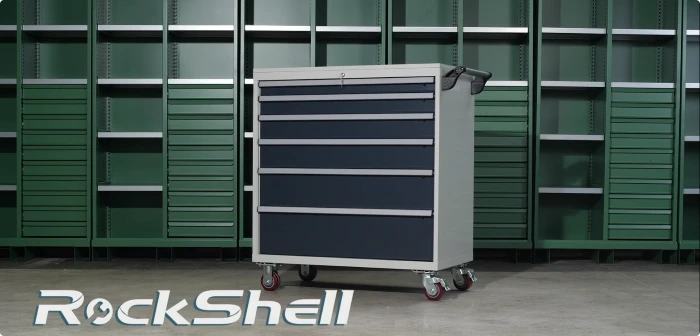


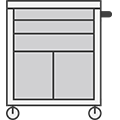
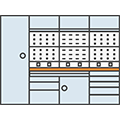
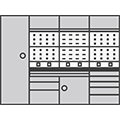















At first glance, an automotive workbench may look similar to a standard workshop bench.
Both provide a surface to work on. Both store tools. Both organize space.
But in real automotive environments, the difference goes far beyond appearance.
Automotive workbenches are engineered for speed, safety, and system integration — while regular workbenches are built mainly for basic tasks.
Here’s what truly separates automotive workbenches from ordinary workbenches.
1. Designed Around Automotive Workflow
A regular workbench is usually a standalone table with drawers.
An automotive workbench is part of a complete service station.
In professional auto repair environments, technicians need:
- Immediate access to power and charging
- Organized tool visibility
- Integrated air supply
- Fast part retrieval
- Flexible layout adjustments
That’s why automotive workbenches often include:
Integrated Power & USB Socket Systems
Five-hole socket modules with USB charging support real-world workshop demands. Socket configurations can be customized for UK, US, EU, or other regional standards — eliminating adapters and extension cords.
This keeps tools powered, devices charged, and workstations clean.

2. Vertical Storage That Improves Efficiency
Standard workbenches mainly rely on drawers.
Automotive workbenches maximize vertical space.
Hanging Inclined Plates (15° Adjustable)
With an 18mm flange edge, inclined plates prevent parts from sliding while keeping components visible. The 15° tilt improves ergonomics and speeds up parts handling during repairs.
Hanging Pegboards & Louvered Panels
Independent hanging systems allow quick replacement and flexible combinations of louvered panels and square-hole pegboards. This makes tool layouts fully customizable for different service tasks.
Instead of searching drawers, technicians see tools at a glance.
3. Integrated Pneumatic Solutions
Regular benches rarely include air management.
Automotive workbenches are designed to support pneumatic tools.
Air Drum Cabinet
Provides up to 10 meters of retractable air hose with adjustable length. The hose can be locked at any position after pulling out, allowing free movement around vehicles without dragging external lines.
Air Pressure Cabinet
Centralizes air distribution directly inside the workstation — reducing floor clutter and improving safety.
This integration significantly increases productivity in busy service bays.
4. Industrial-Grade Work Surfaces
Most ordinary benches use laminated or thin steel tops.
Automotive workbenches require impact resistance and high load capacity.
Oak Solid Wood Countertop
High-density oak offers excellent shock absorption and load-bearing performance. The material is hard, durable, and dimensionally stable — ideal for heavy automotive components.
Optional stainless steel countertops are available for environments requiring oil resistance or easy cleaning.
5. Lighting Designed for Precision Work
Lighting is rarely built into standard benches.
Automotive workbenches support task-level illumination.
Magnetic Induction LED Lights (Optional)
Adjustable magnetic LED lighting can be positioned exactly where needed, improving visibility in detailed repair work and reducing eye strain.

Final Difference: Systems vs Surfaces
A regular workbench offers a surface.
An automotive workbench delivers a system.
From power access and pneumatic integration to vertical tool organization and heavy-duty countertops, automotive workbenches are engineered specifically for vehicle service environments.
For repair centers, dealership workshops, and distributors serving the automotive industry, choosing purpose-built automotive workbenches means:
- Faster service cycles
- Safer workspaces
- Better technician efficiency
- Scalable workstation layouts
In modern garages, productivity starts at the bench.

-e1766383886357.webp)