

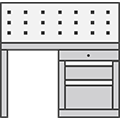



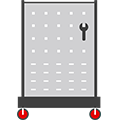
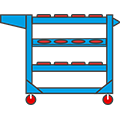


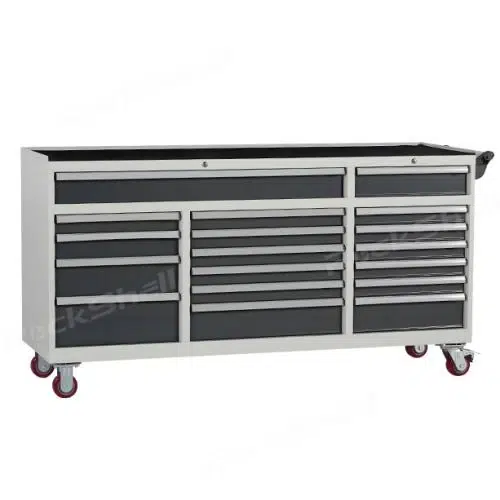


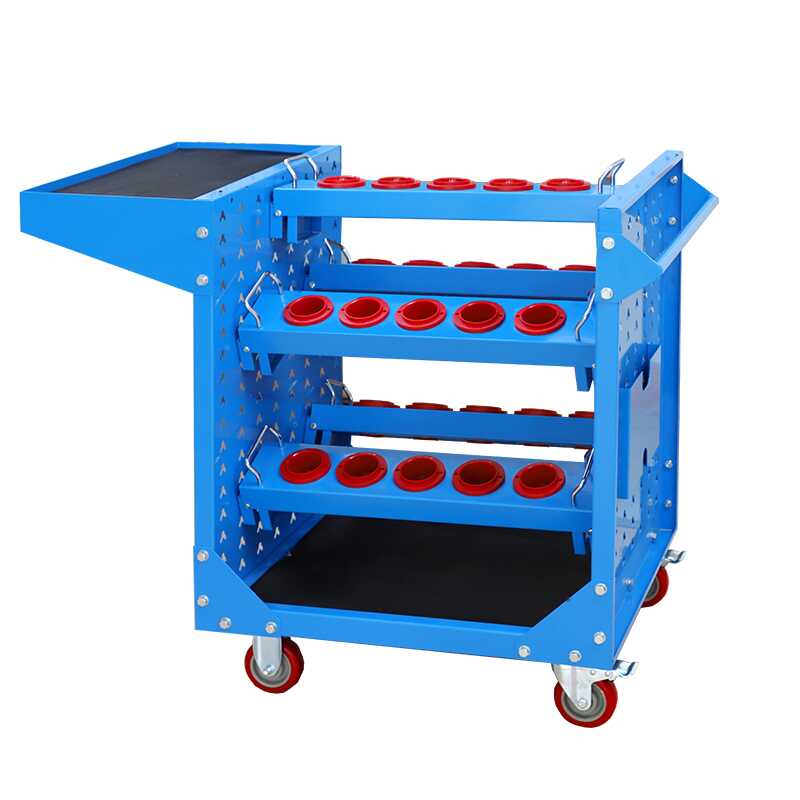


Anyone who has run a workshop knows that organization on the floor directly affects the speed of production. On an assembly line, time is money. Workers should not spend ten minutes looking for a wrench or digging through drawers just to find a specific screw.
A proper tool cabinet for assembly work is not just a storage box — it’s a piece of equipment that optimizes access, protects tools, and supports lean manufacturing. The following guide is for managers who genuinely want to improve efficiency.
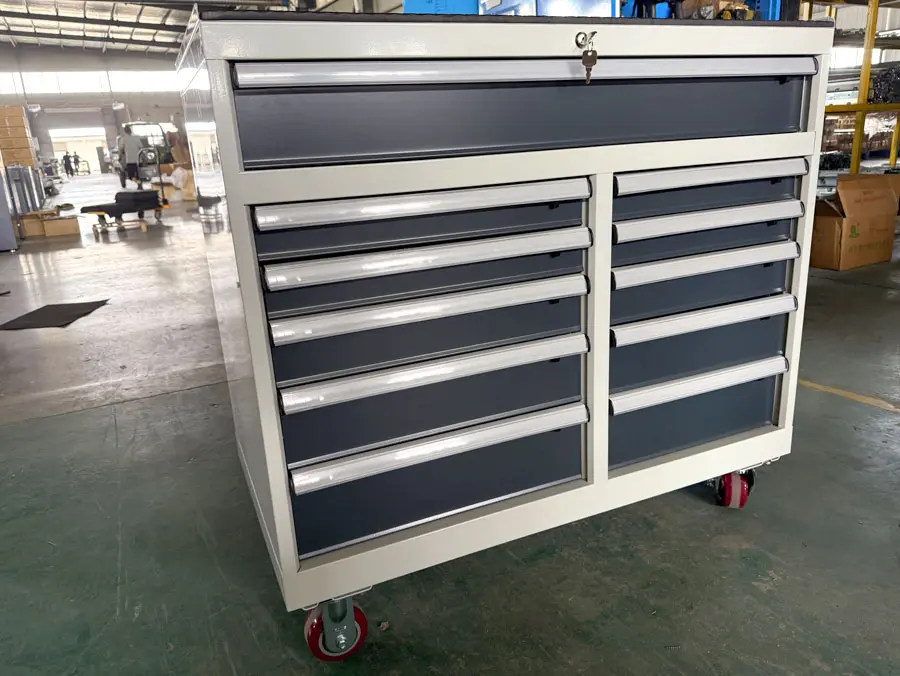
1. Four must-have features of a good assembly tool cabinet
Factory environments are not like homes. Ordinary toolboxes often fall apart in a few months. Industrial-grade assembly cabinets need to deliver the following:
1. Visual management for 5S
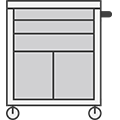
- Label holders on drawers – The aluminum handle has a transparent slot for labels. Tools are visible at a glance, making storage and retrieval fast.
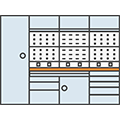
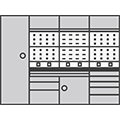
- Louved panel on top or side – Allows different colored parts bins to be hung. Screws, washers, and small parts can be color-coded and organized without rummaging.
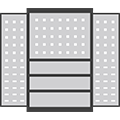
- Square hole panel – Mounted on the side or back. Used with matching hooks to hang common tools like air wrenches, electric screwdrivers, and torque wrenches — always within reach.
2. Worktop that serves as a workstation
The top of the cabinet can be used as a temporary assembly surface. Choose the right top based on your shop floor:
- ESD top – Essential for assembling electronics, sensors, or precision components.
- Heavy beech wood top – Good for mechanical assembly shops. Stands up to hammering and pressing.
- Stainless steel top – Oil-resistant, coolant-resistant, and easy to clean. Best for greasy or chemical-heavy environments.
3. Anti-tip interlock — safety is not optional
This is often overlooked. When several heavy drawers are pulled out at the same time, the cabinet’s center of gravity shifts forward and it can tip over, injuring workers. A good tool cabinet must have a single-open lock system (interlock) — when one drawer is opened, the others are automatically locked. No tipping hazard.
4. Solid load capacity
- Material thickness – At least 14–16 gauge cold-rolled steel. Thick and rigid, capable of handling three shifts a day for years.
- Slides – Standard drawers hold 100–150 kg each. Bottom deep drawers should have dual slides to carry heavy fixtures or large tooling — capacities can exceed 130 kg (285 lbs).